When your English is still clumsy, and you have a small vocabulary, you have a hard time among the native speakers. The most trying is when you are the single foreigner among the patriots. Worse still, in the English speaking world of the Americas people tend to assume that you are a speaker of their language as a default, regardless of your ethnic origin.
The most difficult task is to carry the conversation in a home party, where nobody pays an extra attention to the fact that you're from a country where English is not the first language. Then you develop a set of skills designed to make life comfortable for you and people around.
For example, you develop a skill in which you divert people's attention and direct the conversation with a short sentence.
It is rather like the technique described by Kurt Vonnegut in his essay "A man without a country." I quote:
As I kid I was the youngest member of my family, and the youngest child in any family is always a jokemaker, because a joke is the only way he can enter into an adult conversation. My sister was five years older than I was, my brother was nine years older than I was, and my parents were both talkers. So at the dinner table when I was very young, I was boring to all those other people. They did not want to hear about the dumb childish news of my days. They wanted to talk about really important stuff that happened in high school or maybe in college or at work. So the only way I could get into a conversation was to say something funny. I think I must have done it accidentally at first, just accidentally made a pun that stopped the conversation, something of that sort. And then I found out that a joke was a way to break into an adult conversation.
Kurt Vonnegut, "A man without a country."
When I was in Vancouver in the summer as I was 15, I tried to get into people's conversation with short jokes or "pointers" that make people take attention and smile. When I look back on my desperate efforts I would like to embrace the clumsy in me, in everybody.
Monday, January 25, 2010

Sunday, January 24, 2010
I'll beat you up, heat you up, and eat you up!
t was the summer of 1978. I was a freshman at the senior high, and I was being bombarded by Trevor and Randy with English every day.
I sometimes suspect that being exposed to the unrestrained and spontaneous way kids speak might be a necessary process for one's language to mature. When you start learning a foreign language in the restrained and orderly manner typical to an adult, the music of language might remain stagnant.
It then befell on me somehow to cope with the free and dynamic conversation style of Trevor and Randy. After some while, I invented some strategies to counter the dynamo, and make the conversation flow.
I coined some own expressions to impress the kids. Kids respect people with their own words, you know. So I would go, for example, "I'll beat you up", and then follow, "I'll heat you up", and then say, "I'll eat you up", so that the verbs would rhyme.
"I'll beat you up, heat you up, and eat you up!" Trevor and Randy, especially Trevor, got a kick out of my clumsy invention and started to imitate me.
I sometimes suspect that being exposed to the unrestrained and spontaneous way kids speak might be a necessary process for one's language to mature. When you start learning a foreign language in the restrained and orderly manner typical to an adult, the music of language might remain stagnant.
It then befell on me somehow to cope with the free and dynamic conversation style of Trevor and Randy. After some while, I invented some strategies to counter the dynamo, and make the conversation flow.
I coined some own expressions to impress the kids. Kids respect people with their own words, you know. So I would go, for example, "I'll beat you up", and then follow, "I'll heat you up", and then say, "I'll eat you up", so that the verbs would rhyme.
"I'll beat you up, heat you up, and eat you up!" Trevor and Randy, especially Trevor, got a kick out of my clumsy invention and started to imitate me.
Saturday, January 23, 2010
Everything was so unexpected.
When I was 15, I traveled to Vancouver. It was summer. That was the first time that I ever went abroad.
Although I had by then studied English for three years at the junior high, my language skill was still poor.
Verna came to pick me up at the Rembrandt hotel. When we arrived at 7580 Railway avenue, two boys dashed towards us. They were Trevor and Randy.
Trevor and Randy wanted to play with me the moment we arrived. So we played the Game of Life. What followed was the most trying time in the history of my learning English as a second language.
Adults make considerations for the fact that I am not a native English speaker.
Kids don't. Trevor and Randy bombarded me with questions and comments like a rapid fire, and I had to respond in kind. The first ever game of life played in English was a milestone in my upbringing.
Everything was so unexpected.
Although I had by then studied English for three years at the junior high, my language skill was still poor.
Verna came to pick me up at the Rembrandt hotel. When we arrived at 7580 Railway avenue, two boys dashed towards us. They were Trevor and Randy.
Trevor and Randy wanted to play with me the moment we arrived. So we played the Game of Life. What followed was the most trying time in the history of my learning English as a second language.
Adults make considerations for the fact that I am not a native English speaker.
Kids don't. Trevor and Randy bombarded me with questions and comments like a rapid fire, and I had to respond in kind. The first ever game of life played in English was a milestone in my upbringing.
Everything was so unexpected.
Friday, January 22, 2010
Please can I have a T.V. show which can be enjoyed in 30 minutes
When I was young I used to have many objections against the so-called blockbuster films from Hollywood. I liked films by Yasujiro Ozu, Andrei Tarkovsky, Ingmar Bergman, Ermanno Olmi, Víctor Erice, and so on. The more popular ones almost never thrilled my soul, to be honest, cross my heart.
In Tokyo, the films that I love were shown in a few theaters, while the blockbuster films were shown everywhere. I used to walk around the Tokyo streets with my like-minded friends, and complain that I never understood the foundations and rationale for the popularity of these things.
That was then. It is now. I can now see the motives behind the blockbuster films, apart from the obvious one of making money. I admit that good things might come out of the popular trends, though my emotion still resonates with films of minority sensitivities, like the ones I mentioned above.
One thing I realized in the meantime is that I rather like American T.V. series. The discovery came on the airplanes, when I watched the installed video. These T.V. shows, shown typically in the concise duration of 30 minutes or so, were more to my liking than the extended two hours format of the typical Hollywood films. I could appreciate the effort that went into making a concise, slim script which can entertain people in a short time on the air.
I am thus unconsciously always on the look out for good American T.V. shows. There is one important condition, though. The episodes must be self-contained, to be viewed individually. I cannot take the kind of shows which keeps going and going, as a continuous single story. That would be eventually worse than the 2 hours format of the films.
Please can I have a T.V. show which can be enjoyed in 30 minutes more or less, please.

Seinfeld is a typical American T.V. show that I like. The episodes are self-contained.
In Tokyo, the films that I love were shown in a few theaters, while the blockbuster films were shown everywhere. I used to walk around the Tokyo streets with my like-minded friends, and complain that I never understood the foundations and rationale for the popularity of these things.
That was then. It is now. I can now see the motives behind the blockbuster films, apart from the obvious one of making money. I admit that good things might come out of the popular trends, though my emotion still resonates with films of minority sensitivities, like the ones I mentioned above.
One thing I realized in the meantime is that I rather like American T.V. series. The discovery came on the airplanes, when I watched the installed video. These T.V. shows, shown typically in the concise duration of 30 minutes or so, were more to my liking than the extended two hours format of the typical Hollywood films. I could appreciate the effort that went into making a concise, slim script which can entertain people in a short time on the air.
I am thus unconsciously always on the look out for good American T.V. shows. There is one important condition, though. The episodes must be self-contained, to be viewed individually. I cannot take the kind of shows which keeps going and going, as a continuous single story. That would be eventually worse than the 2 hours format of the films.
Please can I have a T.V. show which can be enjoyed in 30 minutes more or less, please.
Seinfeld is a typical American T.V. show that I like. The episodes are self-contained.
Thursday, January 21, 2010
A plum blossom seem to symbolize a distant past long forgotten
The other day, walking along a Tokyo street, I noticed that a plum tree had started to bloom. While my mind was being deeply shrouded in the winter atmosphere, nature had already begun the preparation for the rejuvenation in the great cycle of life.
Until several years ago, I used to live near a very large park. It was my custom to go for a jogging there. It took about 15 minutes to go around the park. At one corner, there were tens of plum trees. In the cold weather of January, these trees started to bloom, and gave comfort to the lonely soul which was making physical effort, to no practical avail apart from good health.
Near the plum trees, I sometimes witnessed an old man, with a bicycle on his side. He used to practice singing, with a bottle in his hand. Occasionally, he would drink from the bottle, and go gurgling, apparently in an effort to refresh and enliven his throat.
As I was always running past, I could only take a snapshot vision of this gentleman of this intriguing behavior. When I chanced upon him, I considered it as a bonus.
I wonder if the gurgling gentleman is up and well these days.
As I was passing the plum tree the other day, all these memories came back to me in a flash.
The smell of a plum blossom seem to symbolize a distant past long forgotten.
Until several years ago, I used to live near a very large park. It was my custom to go for a jogging there. It took about 15 minutes to go around the park. At one corner, there were tens of plum trees. In the cold weather of January, these trees started to bloom, and gave comfort to the lonely soul which was making physical effort, to no practical avail apart from good health.
Near the plum trees, I sometimes witnessed an old man, with a bicycle on his side. He used to practice singing, with a bottle in his hand. Occasionally, he would drink from the bottle, and go gurgling, apparently in an effort to refresh and enliven his throat.
As I was always running past, I could only take a snapshot vision of this gentleman of this intriguing behavior. When I chanced upon him, I considered it as a bonus.
I wonder if the gurgling gentleman is up and well these days.
As I was passing the plum tree the other day, all these memories came back to me in a flash.
The smell of a plum blossom seem to symbolize a distant past long forgotten.
Wednesday, January 20, 2010
The cloud has already arrived
People talk a lot nowadays about cloud computing. When put in the strictly algorithmic context, there may be many targets and obstacles, still to be reached and dissolved. In terms of the way information is traded between human brains and nurture cultural environment in that process however, the "cloud" has already arrived, if without a resounding fanfare or a vengeance.
When I write this journal, for example, I put the resulting chunk of words into the internet, which the kind-hearted people access and read each day. It may seem a small thing, and it is a small thing in the context of human civilization as a whole, but the trading is here and now, where the like-minded are shrouded by a common medium materialized by the daily communication of information.
The Amazon kindle automatically archives issues of periodicals on the web, relieving the machine of the need to store incrementally heavy information. This is a particularly explicit instance of cloud computing. A similar process is already here for the human brain.
When I write this journal, for example, I put the resulting chunk of words into the internet, which the kind-hearted people access and read each day. It may seem a small thing, and it is a small thing in the context of human civilization as a whole, but the trading is here and now, where the like-minded are shrouded by a common medium materialized by the daily communication of information.
The Amazon kindle automatically archives issues of periodicals on the web, relieving the machine of the need to store incrementally heavy information. This is a particularly explicit instance of cloud computing. A similar process is already here for the human brain.
Tuesday, January 19, 2010
You know pragmatism is different from utilitarianism.
I had a chat with my philosopher friend Ken Shiotani over lunch. He was lecturing in Hosei University, and I caught him as he was waiting for the elevator in the hall.
These days, I make a point of having a time for discourse during the time of my day, as otherwise my intellect would suffocate and become just practical.
Our conversation on analytic philosophy led to Shiotani's appraisal of philosophy in the United States.
"The Americans have an inferiority complex towards the Europeans as regards philosophy", Shiotani said. "As a result, they stress pragmatism as a philosophical fruit borne out of their own tradition".
"Isn't it great," I countered, "that they have their own problems, and find it, define it, and elucidate it?"
"That's right," Shiotani said, "whereas the Japanese philosophers traditionally just import the Western philosophy and translate them, pretending they are their own. Unless the Japanese philosophers identify their own problem, their contribution in history would be limited."
Then Shiotani suddenly remarked. "You know pragmatism is different from utilitarianism."
"You mean, being pragmatic does not just imply a concern about the utilitarian significances of a particular system of thought, but rather, pragmatism is a whole organic network of methodologies involving epistemology and ontology, a particular way of looking at the world at large?"
"More or less. That's the gist of it"
It was lunch time, and our conversation had to end prematurely.
It is nice to go out of your way a little bit and have this window with your best friend of 25 years, towards stimulating my soul.

Ken Shiotani arguing about pragmatism over lunch.
These days, I make a point of having a time for discourse during the time of my day, as otherwise my intellect would suffocate and become just practical.
Our conversation on analytic philosophy led to Shiotani's appraisal of philosophy in the United States.
"The Americans have an inferiority complex towards the Europeans as regards philosophy", Shiotani said. "As a result, they stress pragmatism as a philosophical fruit borne out of their own tradition".
"Isn't it great," I countered, "that they have their own problems, and find it, define it, and elucidate it?"
"That's right," Shiotani said, "whereas the Japanese philosophers traditionally just import the Western philosophy and translate them, pretending they are their own. Unless the Japanese philosophers identify their own problem, their contribution in history would be limited."
Then Shiotani suddenly remarked. "You know pragmatism is different from utilitarianism."
"You mean, being pragmatic does not just imply a concern about the utilitarian significances of a particular system of thought, but rather, pragmatism is a whole organic network of methodologies involving epistemology and ontology, a particular way of looking at the world at large?"
"More or less. That's the gist of it"
It was lunch time, and our conversation had to end prematurely.
It is nice to go out of your way a little bit and have this window with your best friend of 25 years, towards stimulating my soul.
Ken Shiotani arguing about pragmatism over lunch.
Monday, January 18, 2010
Ilya Farber
I met with Ilya Farber on Sunday afternoon. When I first heard that he was staying in Tokyo from Friday to Monday, I was amazed at his hectic schedule. Then I learned that he is actually on transit from the U.S. to Singapore, where he is now teaching at SMU.
We found ourselves seated in a soba restaurant. In the next couple of hours we talked about the neural correlates of consciousness, the pros and cons of analytic philosophy, problems in university life here and there, the prospect of consciousness studies in the future, how to liberate qualia from mysticism, and the joy of life in Singapore.
Ilya is such a fascinating person to talk with, so witty and full of love.
I learned that Ilya is fond of Japanese culture, his favorite manga being Ranma 1/2.
It is rare to get on a conversational jet coaster to ride from Dennetian arguments to the creams of pop culture within 10 minutes.
It was so fun.

Ilya Farber in a Tokyo restaurant.
We found ourselves seated in a soba restaurant. In the next couple of hours we talked about the neural correlates of consciousness, the pros and cons of analytic philosophy, problems in university life here and there, the prospect of consciousness studies in the future, how to liberate qualia from mysticism, and the joy of life in Singapore.
Ilya is such a fascinating person to talk with, so witty and full of love.
I learned that Ilya is fond of Japanese culture, his favorite manga being Ranma 1/2.
It is rare to get on a conversational jet coaster to ride from Dennetian arguments to the creams of pop culture within 10 minutes.
It was so fun.
Ilya Farber in a Tokyo restaurant.
Sunday, January 17, 2010
The parameter space for the character heterogeneities
The functions of molecules such implicated in social contexts as vasopressin and oxytocin would naturally depend on the biochemical and biophysical contexts into which these molecules are placed. Therefore, the contexts ("keyholes") are more important than the molecules ("keys") themselves.
The more robust existence of empathy in female subjects might be related to the balance of oxytocin and vasopressin, but they would remain a indirect cause, the direct cause more explicitly accounted for by the specific neural circuits involved.
Keeping in mind these reservations, there are some arguments for the explicit treatment of these molecules as socially active parameters.
If there was an instance where these molecules are in effect traded between individuals through some measures, that could lead to an effective construction of their social functionality.
The intricate interaction of these "social molecules" would ultimately lead to, for example, differences in character. Therefore, the parameter space for character heterogeneities might be effectively written in terms of the parameter space of these social molecules, in addiction to a description by the specifics of neural circuits.
The more robust existence of empathy in female subjects might be related to the balance of oxytocin and vasopressin, but they would remain a indirect cause, the direct cause more explicitly accounted for by the specific neural circuits involved.
Keeping in mind these reservations, there are some arguments for the explicit treatment of these molecules as socially active parameters.
If there was an instance where these molecules are in effect traded between individuals through some measures, that could lead to an effective construction of their social functionality.
The intricate interaction of these "social molecules" would ultimately lead to, for example, differences in character. Therefore, the parameter space for character heterogeneities might be effectively written in terms of the parameter space of these social molecules, in addiction to a description by the specifics of neural circuits.
Saturday, January 16, 2010
Relatively mild
I don't like wearing a coat even in the middle of winter, as I dislike the feeling of suffocation as one enters the indoors.
Consequently, I opt to wear a T-shirt, and then only a sweater, which is full of small "holes" by their nature through which bitter winds would inevitably blow.
When I went to Hakata the other day, it was snowing and the temperature was very low. As I ventured out of the hotel to have supper, the bitter wind was blowing through my sweater onto my bare arms with an astonishing force. It was at then that I felt a "danger" for my life.
Undaunted, I just hurried on to the restaurant, with my arms gathered around the chest area to protect and shield.
Once I was in the restaurant, I was OK.
Unrepentantly, I go about in the winter Tokyo today with my T-shirt and the sweater. People are astonished to see me without a coat. It can certainly make you alert, reacting to the changing weather. And it is just great once you are inside, without the nuisance of having to get rid of the coat.
It is just the winter of Tokyo that I have to withstand, which is relatively mild compared to, say, one in Russia.
Consequently, I opt to wear a T-shirt, and then only a sweater, which is full of small "holes" by their nature through which bitter winds would inevitably blow.
When I went to Hakata the other day, it was snowing and the temperature was very low. As I ventured out of the hotel to have supper, the bitter wind was blowing through my sweater onto my bare arms with an astonishing force. It was at then that I felt a "danger" for my life.
Undaunted, I just hurried on to the restaurant, with my arms gathered around the chest area to protect and shield.
Once I was in the restaurant, I was OK.
Unrepentantly, I go about in the winter Tokyo today with my T-shirt and the sweater. People are astonished to see me without a coat. It can certainly make you alert, reacting to the changing weather. And it is just great once you are inside, without the nuisance of having to get rid of the coat.
It is just the winter of Tokyo that I have to withstand, which is relatively mild compared to, say, one in Russia.
Friday, January 15, 2010
Out in the Open.
Google's recent decision and moves as regards their operation is laudable. I here pledge my fullest support.
The online manifesto by Jonathan Rosenberg, Senior Vice President of Google, "The meaning of open" spells out important ethics and philosophies for how to proceed with this important medium, the internet.
At issue is the competition between an open system and a closed system. When open and closed system co-exist, sometimes the closed system might seem to have an edge in the short run, as they are more efficient in the limited context.
As time goes by, however, an open and free system would win over the closed and controlled system, because a global optimum can be searched and found, as opposed to the suffocation of the closed and controlled system.
In the contingent universe, we must all be aware that it is impossible to control an organic and dynamical system, after all. The very idea of controlling information to the liking of the regime is childish and is bound to fail.
By putting oneself out in the open, one's spirit gets the freedom to grow out of proportions. Only then we can do justice to this precious thing, life.
The online manifesto by Jonathan Rosenberg, Senior Vice President of Google, "The meaning of open" spells out important ethics and philosophies for how to proceed with this important medium, the internet.
At issue is the competition between an open system and a closed system. When open and closed system co-exist, sometimes the closed system might seem to have an edge in the short run, as they are more efficient in the limited context.
As time goes by, however, an open and free system would win over the closed and controlled system, because a global optimum can be searched and found, as opposed to the suffocation of the closed and controlled system.
In the contingent universe, we must all be aware that it is impossible to control an organic and dynamical system, after all. The very idea of controlling information to the liking of the regime is childish and is bound to fail.
By putting oneself out in the open, one's spirit gets the freedom to grow out of proportions. Only then we can do justice to this precious thing, life.
Thursday, January 14, 2010
Until I reached an intimidating speed
I am in Hakata now. My mother was originally from this region.
When I was a kid mother used to take me to the Kyushu Island. Summers in Kyushu had a profound effect on the buildup of my personality. The dialect, distinct and powerful, was a joy to hear and tickling to imitate.
When I look back on those trips on Shinkansen trains, which typically took hours, the transition itself was a joy, and I long for the breath of fresh air they brought.
Nowadays, it is less than two hours on the airplane, and the sense of transition has diminished.
Walking on the Hakata streets at night, I unconsciously looked for signs of change, both internal and external, and shuddered at the absence of the drastic. I needed to run, until I reached an intimidating speed. I've got it here inside still, the wind tells me.
When I was a kid mother used to take me to the Kyushu Island. Summers in Kyushu had a profound effect on the buildup of my personality. The dialect, distinct and powerful, was a joy to hear and tickling to imitate.
When I look back on those trips on Shinkansen trains, which typically took hours, the transition itself was a joy, and I long for the breath of fresh air they brought.
Nowadays, it is less than two hours on the airplane, and the sense of transition has diminished.
Walking on the Hakata streets at night, I unconsciously looked for signs of change, both internal and external, and shuddered at the absence of the drastic. I needed to run, until I reached an intimidating speed. I've got it here inside still, the wind tells me.
Wednesday, January 13, 2010
The strange destiny of the Love Theme
It is quite fascinating how a particular piece of culture is accepted on a foreign soil. The Japanese have never understood, for example, how and why the Sukiyaki Song was so well received in the United States, compared to many other popular songs of the days.
The opposite is true, of course. The Japanese have embraced lots of foreign influences, in our own particular way.
The film "Godfather" was released in Japan when I was 10. Although many motifs of the film was beyond my comprehension at that age, the theme tune of the film Godfather ("Speak Softly Love (Love Theme from The Godfather)") struck a cord within me as a child. The powerful melody somehow sound similar to Japanese "Enka" songs, very emotional and full of life.
Through a mysterious process, youngsters in Japan who ride motorcycles as a group adopted the Love Theme as their marching music. These "Hells Angel" youths would use the opening melody of the Love Theme as a fanfare, by putting several music horns on the motorcycle.
Somehow, the image of the motorcycle gangsters dashing through the night streets, with the fanfare of the Love Theme played repeatedly, has entered the popular culture of this nation.
When I think of the strange destiny of the Love Theme thus played out, I cannot help but marvel at the rich and subtle way cultures on the planet are mutually connected and evolve as a organic whole.
The opposite is true, of course. The Japanese have embraced lots of foreign influences, in our own particular way.
The film "Godfather" was released in Japan when I was 10. Although many motifs of the film was beyond my comprehension at that age, the theme tune of the film Godfather ("Speak Softly Love (Love Theme from The Godfather)") struck a cord within me as a child. The powerful melody somehow sound similar to Japanese "Enka" songs, very emotional and full of life.
Through a mysterious process, youngsters in Japan who ride motorcycles as a group adopted the Love Theme as their marching music. These "Hells Angel" youths would use the opening melody of the Love Theme as a fanfare, by putting several music horns on the motorcycle.
Somehow, the image of the motorcycle gangsters dashing through the night streets, with the fanfare of the Love Theme played repeatedly, has entered the popular culture of this nation.
When I think of the strange destiny of the Love Theme thus played out, I cannot help but marvel at the rich and subtle way cultures on the planet are mutually connected and evolve as a organic whole.
Tuesday, January 12, 2010
Now out in the world
Mystery is generated and deepens when you can experience something at a particular place and time only. Misere, composed by Gregorio Allegri, was one beautiful example. It was only to be heard in the Vatican, at certain special occasions. The copying of the score was forbidden, with the understanding that those violating the embargo will be punished with excommunication.
Then, the young Mozart came along. He was 14. Listening to the Misere in the Sistine Chapel, he later wrote out the entire score from memory. As everybody now knows, Mozart's memories were extraordinary. Mozart had only to make minor corrections on a second visit to the Chapel. It would have been impossible for anybody else to accomplish this feat.
Through the genius of Mozart, the mysterious music of the Vatican was now out in the world. The Pope, after Mozart was summoned to Rome for investigation, praised his musical genius, instead of excommunicating the charming fellow.
Pondering the significance of this famous episode, I wonder if all creative genius is not like it. Bringing to the world a marvelous gem hidden jealously in some obscure corner of the world, only to be experienced by those who were fortunate enough to be in that location by chance. Genius is about highly strung sensitivities and prodigious memories.

Misere of Gregorio Allegri. Made open by the service of Mozart.
Then, the young Mozart came along. He was 14. Listening to the Misere in the Sistine Chapel, he later wrote out the entire score from memory. As everybody now knows, Mozart's memories were extraordinary. Mozart had only to make minor corrections on a second visit to the Chapel. It would have been impossible for anybody else to accomplish this feat.
Through the genius of Mozart, the mysterious music of the Vatican was now out in the world. The Pope, after Mozart was summoned to Rome for investigation, praised his musical genius, instead of excommunicating the charming fellow.
Pondering the significance of this famous episode, I wonder if all creative genius is not like it. Bringing to the world a marvelous gem hidden jealously in some obscure corner of the world, only to be experienced by those who were fortunate enough to be in that location by chance. Genius is about highly strung sensitivities and prodigious memories.
Misere of Gregorio Allegri. Made open by the service of Mozart.
Monday, January 11, 2010
As is materialized on his belly front
My best philosopher friend Ken Shiotani is rather big, weighing 120kg according to his recent report. In this slim overconscious civilization, you might think that his belly is rather embarassing to exhibit and see. Actually, quite the opposite is true.
People love to watch Shiotani's belly. What is more, people like to touch it.
When we are chatting in a Tokyo restaurant, as I am a very good friend of his, I can poke Shiotani's belly at any time, in a casual manner. It is rather nice, the rubbery feeling. Shiotani also doesn't seem to mind as he is used to my doing that from student days.
When people observe me doing it, they would like to do the same, and eventually do so, with invariably satisfying results.
Apart from the issue of being politically correct, I strongly suspect that there is something about fat bellies that make people around happy. While naturally concerned about my best friend's health, I respect his way of living, as is materialized on his belly front as well as in his philosophy of time, and doubt, for one, the body fascism that seems to be so rampant today.

Ken Shiotani seen in the front.
In the back you see my another soul friend Takashi Ikegami.
This was on Taketomi island.
People love to watch Shiotani's belly. What is more, people like to touch it.
When we are chatting in a Tokyo restaurant, as I am a very good friend of his, I can poke Shiotani's belly at any time, in a casual manner. It is rather nice, the rubbery feeling. Shiotani also doesn't seem to mind as he is used to my doing that from student days.
When people observe me doing it, they would like to do the same, and eventually do so, with invariably satisfying results.
Apart from the issue of being politically correct, I strongly suspect that there is something about fat bellies that make people around happy. While naturally concerned about my best friend's health, I respect his way of living, as is materialized on his belly front as well as in his philosophy of time, and doubt, for one, the body fascism that seems to be so rampant today.
Ken Shiotani seen in the front.
In the back you see my another soul friend Takashi Ikegami.
This was on Taketomi island.
Sunday, January 10, 2010
Strange dancing.
My body is stoutly built, and my legs are not that long. Therefore, I am not a good one for dancing in the style of ballet.
However, I quite like watching other people dance. Once I went to see Jo Kanamori dance. It was a wonderful performance.
Jo Kanamori leads the dance company Noism. I went to see a Noism performance in their host town of Niigata. I was so inspired by their dancing, that when I returned to my hotel room I began strange dancing.
I tried to imitate what I have seen, but of course my bodily movements fell short. In addition, my dance might have been less of a comic performance compared to the immortal silly walk. Conclusion: Mine was a physical activity without any meaningful purpose.
Undaunted, I keep doing the strange dancing from time to time. Nothing to show. Nobody to see. Just me and the air around me which receives the strange vibe.
However, I quite like watching other people dance. Once I went to see Jo Kanamori dance. It was a wonderful performance.
Jo Kanamori leads the dance company Noism. I went to see a Noism performance in their host town of Niigata. I was so inspired by their dancing, that when I returned to my hotel room I began strange dancing.
I tried to imitate what I have seen, but of course my bodily movements fell short. In addition, my dance might have been less of a comic performance compared to the immortal silly walk. Conclusion: Mine was a physical activity without any meaningful purpose.
Undaunted, I keep doing the strange dancing from time to time. Nothing to show. Nobody to see. Just me and the air around me which receives the strange vibe.
Saturday, January 09, 2010
The world at large is never to know.
The great novel "Sanshiro" ends thus.
---------
Yoshiro moved closer to Sanshiro. "How do you like 'Woman in Forest?'"
"The title is no good."
"What should it be, then?"
Sanshiro did not answer him, but to himself he muttered over and over, "Stray sheep. Stray sheep."
Soseki Natsume "Sanshiro", translated by Jay Rubin.
-------------
So finally, it was about a painting. To the casual onlooker it is just a painting of a woman with a fan, posing in the forest. It is nothing but the "Woman in the Forest".
To Sanshio alone, the painting is the focal point of his never-to-return youthful wanderings. The encounter with the enigmatic woman, the romance, the agitations, dreams, heartbreaks, and the eventual catastrophe in the form of the marriage of the woman to a total stranger.
The novel starts with the encounter of Sanshiro with Mineko by the pond, and ends with the fulfillment of the creation of the painting in the final scene. The painting hides many secrets and tears under its shining surface.
The intimacy is private, and the world at large is never to know. Nobody is to hear Sanshiro's sighs. Then the novelist comes to the rescue.

The Sanshiro pond in the University of Tokyo Hongo campus, named after the famous novel.
It was by this pond that Sanshiro met Mineko.
---------
Yoshiro moved closer to Sanshiro. "How do you like 'Woman in Forest?'"
"The title is no good."
"What should it be, then?"
Sanshiro did not answer him, but to himself he muttered over and over, "Stray sheep. Stray sheep."
Soseki Natsume "Sanshiro", translated by Jay Rubin.
-------------
So finally, it was about a painting. To the casual onlooker it is just a painting of a woman with a fan, posing in the forest. It is nothing but the "Woman in the Forest".
To Sanshio alone, the painting is the focal point of his never-to-return youthful wanderings. The encounter with the enigmatic woman, the romance, the agitations, dreams, heartbreaks, and the eventual catastrophe in the form of the marriage of the woman to a total stranger.
The novel starts with the encounter of Sanshiro with Mineko by the pond, and ends with the fulfillment of the creation of the painting in the final scene. The painting hides many secrets and tears under its shining surface.
The intimacy is private, and the world at large is never to know. Nobody is to hear Sanshiro's sighs. Then the novelist comes to the rescue.
The Sanshiro pond in the University of Tokyo Hongo campus, named after the famous novel.
It was by this pond that Sanshiro met Mineko.
Friday, January 08, 2010
Lights, darkness and all.
Drank with my best friends until late at night. Had an early morning, but simply had to stay. There are nights like this when you simply wanted to hang out with your chums.
Thought of leaving in-between, but stayed until the last call was made. Walked out into the Shibuya street. Took a group photo.
Memories of forgone times. Tears, smiles, and visions for the future.
Writing this journal on the way back home. Embracing life. Lights, darkness and all.
Thought of leaving in-between, but stayed until the last call was made. Walked out into the Shibuya street. Took a group photo.
Memories of forgone times. Tears, smiles, and visions for the future.
Writing this journal on the way back home. Embracing life. Lights, darkness and all.
Thursday, January 07, 2010
Dissonance.
During the course of my life, I sometimes search for dissonance. Consonances are surely beautiful. To drink a good white wine in a sunlit room on a late spring afternoon is an epitome of consonance. On the other hand, disagreeing can be also glorify the soul, whether it is with people, food, music, or painting.
Sometimes, the dissonant experience visits us in a subtle form. take the paintings by Francis Bacon (1909-1992), for example. His paintings makes the onlooker uneasy, as if something is wrong with the painting, or the world, or, more seriously, with ourselves. It is as if elements of rage of disagreement is diluted, and sprinkled all over the place, so that the dissonance in distribution becomes something akin to love.

Self Portrait by Francis Bacon.
Sometimes, the dissonant experience visits us in a subtle form. take the paintings by Francis Bacon (1909-1992), for example. His paintings makes the onlooker uneasy, as if something is wrong with the painting, or the world, or, more seriously, with ourselves. It is as if elements of rage of disagreement is diluted, and sprinkled all over the place, so that the dissonance in distribution becomes something akin to love.
Self Portrait by Francis Bacon.
Wednesday, January 06, 2010
Things in the periphery
To encounter new things, you often need to see things in the periphery. The central vision captures things of interest as you understand it now, but the things in the peripheral vision, which might not be of significance for now, might turn out to be life-changing in the end.
So the knack is to see the scenery as a whole, and wait for something to "pop out" from the unconscious into your attention.
What we see is massively parallel in nature. Things are captured in the visual awareness at the same time. Brain's resources as regards attention, perception, cognition, memory, action cannot be allocated to all that are visible at one time. So you need to distribute your concerns diffusely.
How to come to terms with the overflow of the periphery is one of the most essential things in life.
Look at a painting like "Children's Games" by Peter Bruegel the Elder.
Here's a larger file. Notice how things are visible in a massively parallel way. And then let little things tickle you.

Peter Bruegel the Elder. Children's Games. (1560).
So the knack is to see the scenery as a whole, and wait for something to "pop out" from the unconscious into your attention.
What we see is massively parallel in nature. Things are captured in the visual awareness at the same time. Brain's resources as regards attention, perception, cognition, memory, action cannot be allocated to all that are visible at one time. So you need to distribute your concerns diffusely.
How to come to terms with the overflow of the periphery is one of the most essential things in life.
Look at a painting like "Children's Games" by Peter Bruegel the Elder.
Here's a larger file. Notice how things are visible in a massively parallel way. And then let little things tickle you.

Peter Bruegel the Elder. Children's Games. (1560).
Tuesday, January 05, 2010
Nothing to say.
Take the starry night by Vincent van Gogh, for example. This oil painting, painted in 1889, strikes one with a vivid impression. However, Gogh himself has nothing to say about it.
Nothing to say. Creators must remain silent, after the work is finished. If the work is powerful enough, it will speak for the self. The urge to add some words to the self-standing work is a testimony of its feebleness. Weakness requires complements. Beauty and power are self-sustaining.
If you are a creator, you should not go moping about, concerning your work. You may want to do it privately, among your close friends, but not publicly.
This universe, which we inhabit, is a beautiful and powerful place, with lots of secrets and treasures, a small portion of which we humans have uncovered. It is a self-sustaining work.
That is probably why God remains silent.
Nothing to say.

The Starry Night. By Vincent van Gogh
Nothing to say. Creators must remain silent, after the work is finished. If the work is powerful enough, it will speak for the self. The urge to add some words to the self-standing work is a testimony of its feebleness. Weakness requires complements. Beauty and power are self-sustaining.
If you are a creator, you should not go moping about, concerning your work. You may want to do it privately, among your close friends, but not publicly.
This universe, which we inhabit, is a beautiful and powerful place, with lots of secrets and treasures, a small portion of which we humans have uncovered. It is a self-sustaining work.
That is probably why God remains silent.
Nothing to say.
The Starry Night. By Vincent van Gogh
Monday, January 04, 2010
Wild Animals
When you watch classic films shot in Japan's Showa era like Akira Kurosawa's "High and Low", you are surprised by the swift and vivid movements of the actors.
The actions are full of energy, with surprising twists, and accompanied by the very strong feeling of something living here and now.
Although the gist of the impressions is surely due to the mastery of the great director, I think it has a lot to do with the Zeitgeist, too. The film was released in 1963. At that time, 17 years after the end of second world war, Japanese economy was rapidly growing, rather like today's China. People were naturally highly motivated, with a belief that tomorrow will bring something exciting, something unprecedented. Such a mindset shows in the movements.
Civilization, when it develops, envelops the human beings with lots of protections. We become "vetted", and lose our wilderness. With the advent of the internet, we are all in a danger of constant vetting, and that is reflected in our daily movements.
To watch a film like "High and Low" is tantamount to having a glimpse into the time in which we were rather like "wild animals", roaming in the world at large, driven by our own instincts, oblivious of the glass ceiling of civilization which actually exists in any given era.

Cover of Akira Kurosawa's "High and Low" DVD.
The actions are full of energy, with surprising twists, and accompanied by the very strong feeling of something living here and now.
Although the gist of the impressions is surely due to the mastery of the great director, I think it has a lot to do with the Zeitgeist, too. The film was released in 1963. At that time, 17 years after the end of second world war, Japanese economy was rapidly growing, rather like today's China. People were naturally highly motivated, with a belief that tomorrow will bring something exciting, something unprecedented. Such a mindset shows in the movements.
Civilization, when it develops, envelops the human beings with lots of protections. We become "vetted", and lose our wilderness. With the advent of the internet, we are all in a danger of constant vetting, and that is reflected in our daily movements.
To watch a film like "High and Low" is tantamount to having a glimpse into the time in which we were rather like "wild animals", roaming in the world at large, driven by our own instincts, oblivious of the glass ceiling of civilization which actually exists in any given era.
Cover of Akira Kurosawa's "High and Low" DVD.
Sunday, January 03, 2010
"I am happy. I will live long"
In Yasujiro Ozu's film "Early Summer" ("Bakushu"), there is a surprise scene where Noriko (played by Setsuko Hara) agrees to marry the widower Kenkichi (played by Hiroshi Nihonyangagi). Kenkichi's mother, Tami (played by Haruko Sugimura), on a sudden impulse says that she had been wishing that somebody like Noriko would marry the lonely man. The unexpected proposal, and Noriko's equally unanticipated "yes", is a dramatic turning point in the tranquility of the beautiful cinema.
Upon hearing Noriko's consent, Tami goes on to say "Thank you very much. I am happy. I will live long." Tami has been worried about her son's future, and her own welfare, but now that the key arrangement has been made, she can rest assured that her remaining days, the last stretch of life, would be happy.
Seeing my own mother for the New year, I remembered the poignant scene from the great master. And I wished that my mother would be able to say "I am happy. I will live long." in the coming years.
Life is full of ups and downs, and I can take my share of the upheavals, as I am determined to be strong in heart, but I would like my aging parents to be happy, without conditions.

The immortal "proposal" scene from "Early Summer."
Upon hearing Noriko's consent, Tami goes on to say "Thank you very much. I am happy. I will live long." Tami has been worried about her son's future, and her own welfare, but now that the key arrangement has been made, she can rest assured that her remaining days, the last stretch of life, would be happy.
Seeing my own mother for the New year, I remembered the poignant scene from the great master. And I wished that my mother would be able to say "I am happy. I will live long." in the coming years.
Life is full of ups and downs, and I can take my share of the upheavals, as I am determined to be strong in heart, but I would like my aging parents to be happy, without conditions.
The immortal "proposal" scene from "Early Summer."
Saturday, January 02, 2010
The blanket mood
As a kid I used to stay in the blanket, especially on a cold morning.
I would wrap myself entirely in the warm cloth, with only my head sticking out of it. At this posture, the wayward strings and fluffs would be just in front of me. I would watch them in a correspondingly capricious mood, slightly out of focus. Then I would gradually find myself in a virtually isolated state. Cozily isolated.
The world around me disappears. There is just I and the piece of string protruding out of the blanket. I would be immensely happy. Like I was still in the mother's womb. There was nothing to be added, or subtracted. I am in a perfect state of bliss.
Then time passes, and I have to go to the toilet, or prepare myself to go to school. With a sigh and resignation, I would hesitatingly get out of the blanket. Those were the days.
Mornings have become practical nowadays. I seldom get into the blanket mood. When, on a rare occasion, I find myself reluctant to get out of it, I regard it as a special bonus. The spirit of childhood has returned to me.
I would wrap myself entirely in the warm cloth, with only my head sticking out of it. At this posture, the wayward strings and fluffs would be just in front of me. I would watch them in a correspondingly capricious mood, slightly out of focus. Then I would gradually find myself in a virtually isolated state. Cozily isolated.
The world around me disappears. There is just I and the piece of string protruding out of the blanket. I would be immensely happy. Like I was still in the mother's womb. There was nothing to be added, or subtracted. I am in a perfect state of bliss.
Then time passes, and I have to go to the toilet, or prepare myself to go to school. With a sigh and resignation, I would hesitatingly get out of the blanket. Those were the days.
Mornings have become practical nowadays. I seldom get into the blanket mood. When, on a rare occasion, I find myself reluctant to get out of it, I regard it as a special bonus. The spirit of childhood has returned to me.
Friday, January 01, 2010
Escape velocity
I feel as if I am in a period of inner transformation. I try to do things that have not been possible so far, and shy away from things that have become easy and accustomed for me.
The things that I would like to do, the worlds in which I prefer to be, have not changed so much over the years. The key is how you can be honest about it. We have a great functionality of adjusting to the environment, and that could also be a source of curse sometimes.
Gravitational pull can be enjoyed. The escape velocity for the earth is 11.2 km. Let's see how fast I can run this year.
And let's keep enjoying the small things, like the blossom of violet on the side of the meandering path.
The things that I would like to do, the worlds in which I prefer to be, have not changed so much over the years. The key is how you can be honest about it. We have a great functionality of adjusting to the environment, and that could also be a source of curse sometimes.
Gravitational pull can be enjoyed. The escape velocity for the earth is 11.2 km. Let's see how fast I can run this year.
And let's keep enjoying the small things, like the blossom of violet on the side of the meandering path.
Thursday, December 31, 2009
The knack is to be struck unawares.
I love the Beatles. The definition of my heaven is when I drive in the U.K. countryside, listening to a Beatles album, preferably St. Peppers or Abbey Road.
My manner of encounter with the music of Beatles was unexpected. When I was 12, I was listening to the radio, and all of a sudden this music just jumped into my ear. I knew it was something quite different from what I had been hearing. That was the Beatles.
The time was 1975. Although by then the fabulous four had already dissolved the group, there were always waves of revival, and I was caught in one of them.
Once, I narrated my own initiation into the kingdom of Beatlemania to the famous photographer Shimpei Asai, who captured many memorable moments of the group's Tokyo tour. Shimpei said that it was an ideal way of getting to know the music of Beatles.
The knack is to be struck unawares. Without any prior knowledge, suddenly you're exposed to a whole new realm of the unknown. It is love at first sight or hearing.
What bliss. Life is full of surprises. You have to wait for one.
Writing this, I am reminded of Miranda's immortal speech in Tempest.
"O wonder!
How many goodly creatures are there here!
How beautious mankind is!
O brave new world,
That has such people in't!"
What a genius is William! How well he captures the blessings of the unknown!
My manner of encounter with the music of Beatles was unexpected. When I was 12, I was listening to the radio, and all of a sudden this music just jumped into my ear. I knew it was something quite different from what I had been hearing. That was the Beatles.
The time was 1975. Although by then the fabulous four had already dissolved the group, there were always waves of revival, and I was caught in one of them.
Once, I narrated my own initiation into the kingdom of Beatlemania to the famous photographer Shimpei Asai, who captured many memorable moments of the group's Tokyo tour. Shimpei said that it was an ideal way of getting to know the music of Beatles.
The knack is to be struck unawares. Without any prior knowledge, suddenly you're exposed to a whole new realm of the unknown. It is love at first sight or hearing.
What bliss. Life is full of surprises. You have to wait for one.
Writing this, I am reminded of Miranda's immortal speech in Tempest.
"O wonder!
How many goodly creatures are there here!
How beautious mankind is!
O brave new world,
That has such people in't!"
What a genius is William! How well he captures the blessings of the unknown!
Wednesday, December 30, 2009
Full of life!
I had several dialogues with the artist Shusaku Arakawa in 2006, including one television shoot. The location for the TV dialogue was in the “Reversible Destiny Lofts MITAKA -In Memory of Helen Keller“. The producer was Goichi Hanano.
Shusaku Arakawa is a fascinating person. He speaks with energy and passion, and his words are poems in motion.
Once Shusaku gave a lecture at the Tokyo University of Fine arts and Music. For those who attended the lecture, and for those who subsequently listened to it on the internet through the MP3 file, the talk is now a legend.
I particularly remember the moment when Shusaku cried aloud, noticing that he has inadvertently let out some saliva as he was talking too enthusiastically.
"Look! In that saliva, there are billions of organisms. You see? The world is like that! Full of life!"
The memory of that "full of life!" moment would stay with me for a long long time.
Human memories are strange. I somehow remembered my time with Shusaku Arakawa this morning.

With Shusaku Arakawa in the “Reversible Destiny Lofts MITAKA -In Memory of Helen Keller“, April 2006.
Shusaku Arakawa is a fascinating person. He speaks with energy and passion, and his words are poems in motion.
Once Shusaku gave a lecture at the Tokyo University of Fine arts and Music. For those who attended the lecture, and for those who subsequently listened to it on the internet through the MP3 file, the talk is now a legend.
I particularly remember the moment when Shusaku cried aloud, noticing that he has inadvertently let out some saliva as he was talking too enthusiastically.
"Look! In that saliva, there are billions of organisms. You see? The world is like that! Full of life!"
The memory of that "full of life!" moment would stay with me for a long long time.
Human memories are strange. I somehow remembered my time with Shusaku Arakawa this morning.
With Shusaku Arakawa in the “Reversible Destiny Lofts MITAKA -In Memory of Helen Keller“, April 2006.
Tuesday, December 29, 2009
The ultimate role model
It is interesting that intellectuals who are not ostensibly religious are drawn to the life of Jesus Christ. Oscar Wilde, whose life on the surface seems to be one of indulgence and extravagance rather than prudence, came to a deep understanding of the life and teachings of Jesus Christ in his last years. Wilde was imprisoned for a "crime" which by today's standards is nothing but an expression of personal traits best left for discretions. Wilde's De Profundis, written in the prison, delights the reader with the artist's in-depth interpretation of the man that was Jesus Christ.
Leo Tolstoy, the novelist of Anna Karenina and War and Peace, dedicated his later years to writing on Christianity. His book "The Gospel in Brief" had a profound effect on Ludwig Wittgenstein, arguably the greatest philosopher of the 20th century. Wittgenstein carried the book everywhere, and recommended it to people he encountered, so that he came to be known as the "Gospel man".
It is interesting to observe in what context Jesus Christ became an inspiration for these valuable people. It was the principle of individuality. In Jesus Christ we find a man who did not become fearful of obeying one's inner voice even if that was against the common sense and codes of morality of the society at that particular time. Creativity is often proportional to the courage to venture into unbeaten paths, and Jesus Christ provided the ultimate role model.
In the pursuit of individuality, "God" could be a metaphor. God represents that which is unchangeable and ever life-supportive in the battles of individuality in a society where the peer pressures are sometimes too strong and the codes of behavior too demanding.
Leo Tolstoy, the novelist of Anna Karenina and War and Peace, dedicated his later years to writing on Christianity. His book "The Gospel in Brief" had a profound effect on Ludwig Wittgenstein, arguably the greatest philosopher of the 20th century. Wittgenstein carried the book everywhere, and recommended it to people he encountered, so that he came to be known as the "Gospel man".
It is interesting to observe in what context Jesus Christ became an inspiration for these valuable people. It was the principle of individuality. In Jesus Christ we find a man who did not become fearful of obeying one's inner voice even if that was against the common sense and codes of morality of the society at that particular time. Creativity is often proportional to the courage to venture into unbeaten paths, and Jesus Christ provided the ultimate role model.
In the pursuit of individuality, "God" could be a metaphor. God represents that which is unchangeable and ever life-supportive in the battles of individuality in a society where the peer pressures are sometimes too strong and the codes of behavior too demanding.
Monday, December 28, 2009
Soseki without stomachache
Sanshiro is one of my beloved novels by Soseki Natsume. As I was transferring data into my new notebook computer, I had some time, and was reading an English translation of Sanshiro.
Haruki Murakami writes the preface. What Mr. Murakami says is quite interesting. I quote.
-----------------
The protagonist of Sanshiro, however, is different. He, too, is unable to find his proper place amid dislocated circumstances, but he never fully confronts those circumstances as a problem within himself. Instead, he accepts them in a relatively natural way, with a young man's particular kind of nonchalant resignation, as something entirely external to himself. "Oh, well, that's how it goes," he seems to say. Stomach pain has not yet entered his world. I think that Sanshiro is a personal favorite of mime because it depicts this natural functioning of the young protagonist's psyche in an utterly mellifluous style. Sanshiro watches life sweeping him along the same way he looks at clouds sailing through the sky. The free movement of his gaze draws us in almost before we know it, and we forget to view him critically.
Haruki Murakami, Preface to Sanshiro, translated by Jay Rubin.
-----------------
Here, Mr. Murakami's usage of the "stomachache" metaphor is interesting. It is well known that Soseki Natsume suffered from stomach conditions for most of his career, especially in the late years. It may well be that such physical circumstances influenced what Soseki wrote as a novelist in a profound way, affecting the world view and the manner in which the protagonist of the story moved around in the fictitious world.
In this context, Haruki Murakami himself might be regarded as "Soseki without stomachache".

Sanshiro. Translated by Jay Rubin.
Haruki Murakami writes the preface. What Mr. Murakami says is quite interesting. I quote.
-----------------
The protagonist of Sanshiro, however, is different. He, too, is unable to find his proper place amid dislocated circumstances, but he never fully confronts those circumstances as a problem within himself. Instead, he accepts them in a relatively natural way, with a young man's particular kind of nonchalant resignation, as something entirely external to himself. "Oh, well, that's how it goes," he seems to say. Stomach pain has not yet entered his world. I think that Sanshiro is a personal favorite of mime because it depicts this natural functioning of the young protagonist's psyche in an utterly mellifluous style. Sanshiro watches life sweeping him along the same way he looks at clouds sailing through the sky. The free movement of his gaze draws us in almost before we know it, and we forget to view him critically.
Haruki Murakami, Preface to Sanshiro, translated by Jay Rubin.
-----------------
Here, Mr. Murakami's usage of the "stomachache" metaphor is interesting. It is well known that Soseki Natsume suffered from stomach conditions for most of his career, especially in the late years. It may well be that such physical circumstances influenced what Soseki wrote as a novelist in a profound way, affecting the world view and the manner in which the protagonist of the story moved around in the fictitious world.
In this context, Haruki Murakami himself might be regarded as "Soseki without stomachache".
Sanshiro. Translated by Jay Rubin.
Sunday, December 27, 2009
My twitter account is
http://www.twitter.com/kenmogi
Please look in, and follow me if you like what you see.
http://www.twitter.com/kenmogi
Please look in, and follow me if you like what you see.
Autobiography too soon
People have this idea that autobiographies are written by people who have "done it", whose merits and achievements have been more or less established.
There are times, however, when an autobiography is produced in the middle of a career, "prematurely" or too soon according to the above stated criterion.
Richard Wagner's "My Life" (original German title "Mein Leben") was one such autobiography out of context. Covering the composer's life between 1813 and 1864, it describes the often turbulent events and life's courses of the composer of Tannhauser, Lohengrin, and Tristan und Isolde. It was dictated to Cosima Wagner, his second life, in response to a request by King Ludwig II of Bavaria.
At the time of the publication of Mein Leben, Wagner's career was far from over. He went on to compose Die Meistersinger, complete Der Ring des Nibelungen, found the Bayreuth festival, and create his final opera Parsifal.
What was the significance of Mein Leben? I suspect that it led to a resurgence of Wagner's creative momentum at a critical period.
The significance is a psychological one. Looking back on one's past, searching for hidden meanings, discovering latent agenda, understanding one's own choices and coming to terms with one's own self is sometimes a necessary and benevolent process for the creator. In the healing of soul, in the journey into one's spiritual magma there is often a key for a renewed surge of the creative dynamo.
For these reasons, I regard the dictation of Mein Leben as a process of reconciliation and regeneration for the great artist.
Even if one doesn't actually go as far as producing a premature autobiography, reflecting on one's past is surely a panacea for the soul when the waters are troubled and your volcano remains silent.
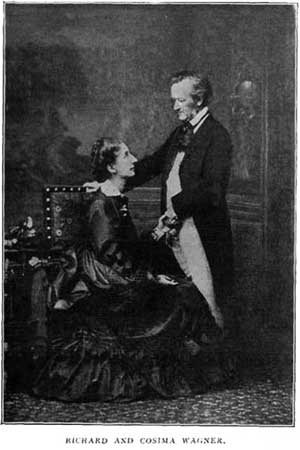
Richard and Cosima Wagner
There are times, however, when an autobiography is produced in the middle of a career, "prematurely" or too soon according to the above stated criterion.
Richard Wagner's "My Life" (original German title "Mein Leben") was one such autobiography out of context. Covering the composer's life between 1813 and 1864, it describes the often turbulent events and life's courses of the composer of Tannhauser, Lohengrin, and Tristan und Isolde. It was dictated to Cosima Wagner, his second life, in response to a request by King Ludwig II of Bavaria.
At the time of the publication of Mein Leben, Wagner's career was far from over. He went on to compose Die Meistersinger, complete Der Ring des Nibelungen, found the Bayreuth festival, and create his final opera Parsifal.
What was the significance of Mein Leben? I suspect that it led to a resurgence of Wagner's creative momentum at a critical period.
The significance is a psychological one. Looking back on one's past, searching for hidden meanings, discovering latent agenda, understanding one's own choices and coming to terms with one's own self is sometimes a necessary and benevolent process for the creator. In the healing of soul, in the journey into one's spiritual magma there is often a key for a renewed surge of the creative dynamo.
For these reasons, I regard the dictation of Mein Leben as a process of reconciliation and regeneration for the great artist.
Even if one doesn't actually go as far as producing a premature autobiography, reflecting on one's past is surely a panacea for the soul when the waters are troubled and your volcano remains silent.
Richard and Cosima Wagner
Saturday, December 26, 2009
Star of the Giants
When I was a kid, one of the things that I admired was "guts".
It was in part influenced by pieces of the Japanese manga. For example, "Star of the Giants" ("Kyojin no Hoshi"). This legendary sports anime was aired just as I entered the elementary school. The hero, Hyuma Hoshi, overcomes obstacles after obstacles to become a true star of the Tokyo Giants, the one and only powerful and popular baseball club at that time.
The idea was to make efforts, to show perseverance, and try to transform yourself, both physically and spiritually.
Somehow the idea of making strenuous efforts gripped me. When I was eight, I remember quite vividly how I started to run along the school track with some of my friends in the after hours. As my friends dropped running, I continued to run around, never stopping.
The theme tune of the Star of Giants was in my mind, inspiring the eight year old. It was a stupid thing to do, but fun.
I gave up running only when the bell rang and the school teacher came to tell us that it was time to go home.
To this day, I sometimes wonder if I don't carry the flag of perseverance still in my spirit. When things get hard and the circumstances are against you, I sometimes remember the small child that was I who made bold efforts to overcome.
I suspect that I was a loner in that respect. The influence of an amine has many colors for different people.

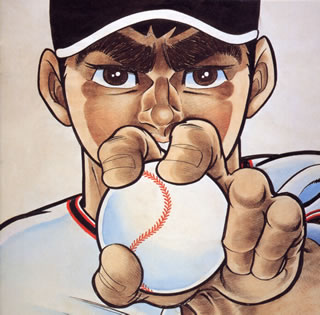
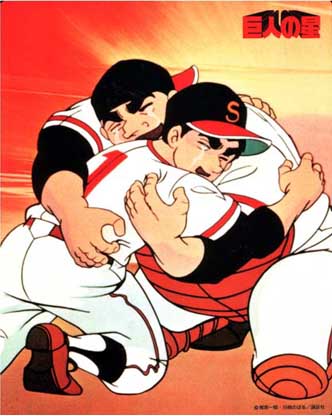
Some scenes from the now legendary "Star of the Giants"
It was in part influenced by pieces of the Japanese manga. For example, "Star of the Giants" ("Kyojin no Hoshi"). This legendary sports anime was aired just as I entered the elementary school. The hero, Hyuma Hoshi, overcomes obstacles after obstacles to become a true star of the Tokyo Giants, the one and only powerful and popular baseball club at that time.
The idea was to make efforts, to show perseverance, and try to transform yourself, both physically and spiritually.
Somehow the idea of making strenuous efforts gripped me. When I was eight, I remember quite vividly how I started to run along the school track with some of my friends in the after hours. As my friends dropped running, I continued to run around, never stopping.
The theme tune of the Star of Giants was in my mind, inspiring the eight year old. It was a stupid thing to do, but fun.
I gave up running only when the bell rang and the school teacher came to tell us that it was time to go home.
To this day, I sometimes wonder if I don't carry the flag of perseverance still in my spirit. When things get hard and the circumstances are against you, I sometimes remember the small child that was I who made bold efforts to overcome.
I suspect that I was a loner in that respect. The influence of an amine has many colors for different people.
Some scenes from the now legendary "Star of the Giants"
Friday, December 25, 2009
Thunderbird 2, my friend.
Although less than 1% of Japanese are Christians, the custom of Christmas festivities and present givings are avidly followed here, especially by the ever eager kids.
When I was six, I wanted so badly the secret base of thunderbirds, complete with Thunderbird 1 and Thunderbird 2. I repeatedly looked at the picture of the machine-equipped and gadget-filled island in the advertisements with shining eyes.
If only I could get the secret base!
The world will be mine, I thought.
I could not get the secret base itself, though. To my great disappointment, the local store did not carry it, and the idea of internet shopping was a futuristic non-existence in those days.
I got a Thunderbird 2 instead.
Although not particularly stylish, because of its abilities to carry tons of equipments, Thunderbird 2 fascinated me. Its fat shape was universally popular among boys.
Maybe that's why my body around the belly resembles the Thunderbird 2 nowadays.
Thunderbird 2, my friend.

The secret base ("Tracy Island").
Something similar to this infused
the 6 year old me with yearning and desire.

Thunderbird 2. My friend.
When I was six, I wanted so badly the secret base of thunderbirds, complete with Thunderbird 1 and Thunderbird 2. I repeatedly looked at the picture of the machine-equipped and gadget-filled island in the advertisements with shining eyes.
If only I could get the secret base!
The world will be mine, I thought.
I could not get the secret base itself, though. To my great disappointment, the local store did not carry it, and the idea of internet shopping was a futuristic non-existence in those days.
I got a Thunderbird 2 instead.
Although not particularly stylish, because of its abilities to carry tons of equipments, Thunderbird 2 fascinated me. Its fat shape was universally popular among boys.
Maybe that's why my body around the belly resembles the Thunderbird 2 nowadays.
Thunderbird 2, my friend.
The secret base ("Tracy Island").
Something similar to this infused
the 6 year old me with yearning and desire.
Thunderbird 2. My friend.
Thursday, December 24, 2009
Comment moderation
Due to the increase of comment spams, the comments to this blog are now moderated. They would appear after I review and approve them. Thank you for your understanding. I hope you guys keep posting interesting and stimulating comments. Your comments are always very encouraging and inspire me. Thanks!
Quite close to the weakness often lies one's strength
One is naturally shy of exhibiting one's weakness. It might be a point of attack for the enemy, making us vulnerable in the world when at large.
However, one should also know that quite close to the weakness often lies one's strength.
One of the brain's most important functions is to adapt to the environment. In order to do that, one needs to read the context, and adjust one's activities. However, sometimes the failure to be flexible in the context can be actually become one's jump board to greatness.
Albert Einstein, for example. He was a non-conformist, dropping out of the gymnasium and traveling in Europe alone in the teens. At the university, he refused to address his professor in anything other than "Herr" ("Mr."), a social blunder in the German speaking world at that time. Albert's reasoning was that he did not respect him.
A more "context-intelligent" person would have acted otherwise, but then Albert Einstein could not have been the historical figure we know. The simple refusal to adapt to the context led to the great originality of the theory of relativity, which revolutionized the way we view the universe. Albert's weakness was also his strength.
The greatest physicist since Newton might appear to be an extreme example for our daily relevance, but we do learn a lot from the extremities. We should all be more tolerant of our own weaknesses.
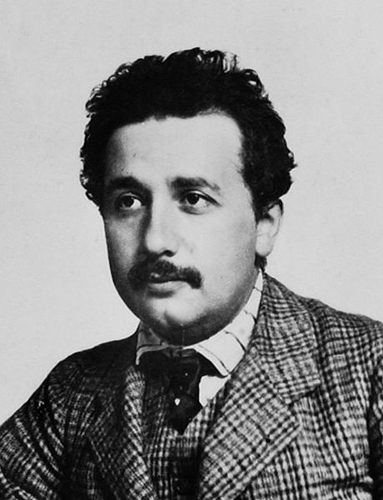
The young Albert Einstein
However, one should also know that quite close to the weakness often lies one's strength.
One of the brain's most important functions is to adapt to the environment. In order to do that, one needs to read the context, and adjust one's activities. However, sometimes the failure to be flexible in the context can be actually become one's jump board to greatness.
Albert Einstein, for example. He was a non-conformist, dropping out of the gymnasium and traveling in Europe alone in the teens. At the university, he refused to address his professor in anything other than "Herr" ("Mr."), a social blunder in the German speaking world at that time. Albert's reasoning was that he did not respect him.
A more "context-intelligent" person would have acted otherwise, but then Albert Einstein could not have been the historical figure we know. The simple refusal to adapt to the context led to the great originality of the theory of relativity, which revolutionized the way we view the universe. Albert's weakness was also his strength.
The greatest physicist since Newton might appear to be an extreme example for our daily relevance, but we do learn a lot from the extremities. We should all be more tolerant of our own weaknesses.
The young Albert Einstein
Wednesday, December 23, 2009
Paper hat
While I was studying in Cambridge, I was invited to my mentor Horace Barlow's Xmas party once. It was a small and cozy party, with Horace's family and lab members.
Horace at that time was already of a venerable age, and yet it was fun to watch how he enjoyed opening the Christmas cracker, just like a child.
Out of all the contents of the Christmas cracker, the paper hat was the main thing. People wore them without exception, including Horace.
I have a vivid recollection of how Horace was smiling, with the paper hat on his head, looking like a five year old trying to pretend to be a king. To this day I cherish the memory of the wonderful sunshine emanating from Horace's countenance.
A Christmas crackers is a great inducer of the child in one. A child inducer is always a good thing.

Horace Barlow.
Horace at that time was already of a venerable age, and yet it was fun to watch how he enjoyed opening the Christmas cracker, just like a child.
Out of all the contents of the Christmas cracker, the paper hat was the main thing. People wore them without exception, including Horace.
I have a vivid recollection of how Horace was smiling, with the paper hat on his head, looking like a five year old trying to pretend to be a king. To this day I cherish the memory of the wonderful sunshine emanating from Horace's countenance.
A Christmas crackers is a great inducer of the child in one. A child inducer is always a good thing.
Horace Barlow.
Tuesday, December 22, 2009
Giant trees
When I went to Cambridge, U.K. for the first time some 15 years ago, I was fascinated by the trees. Walking along the path in Jesus Green, my heart was won by the huge old trees flanking the straightway. The fact that people in Cambridge took care so that these lovely things could be preserved, was enough testimony of the generally benevolent spiritual environment of the city, not to mention the excellent colleges and the University.
Wherever I go, I look for giant trees, and try to make friends with them. I touch the bark, look up at the leaves, and feel the lights and winds that have nurtured the remarkable specimen for all those years.
The giant camphor tree in Kamo, Kagoshima is one of my favorites. I have visited the tree several times, and get a renewed inspiration every time.
Over the years, the giant camphor tree has been revered as a deity. The tree is estimated to be about 1500 years old.
It is interesting how the passage of time left traces on the surface of the bark, and twisted the whole body in an impressive, dynamic form.
Time brings venerability, and venerability is made visible by the interaction of so many elements, directed by nobody, meant for no admirer.
Thus, I am just an incidental admirer.
Giant trees are one of the most ancient and powerful art forms found in Nature. The incident makes one cry.

The giant camphor tree in Kamo, Kagoshima.
Wherever I go, I look for giant trees, and try to make friends with them. I touch the bark, look up at the leaves, and feel the lights and winds that have nurtured the remarkable specimen for all those years.
The giant camphor tree in Kamo, Kagoshima is one of my favorites. I have visited the tree several times, and get a renewed inspiration every time.
Over the years, the giant camphor tree has been revered as a deity. The tree is estimated to be about 1500 years old.
It is interesting how the passage of time left traces on the surface of the bark, and twisted the whole body in an impressive, dynamic form.
Time brings venerability, and venerability is made visible by the interaction of so many elements, directed by nobody, meant for no admirer.
Thus, I am just an incidental admirer.
Giant trees are one of the most ancient and powerful art forms found in Nature. The incident makes one cry.
The giant camphor tree in Kamo, Kagoshima.
Monday, December 21, 2009
Can we really speak of "red"?
Ludwig Wittgenstein wrote, at the end of Tractatus Logico-Philosophicus, that "Whereof one cannot speak, thereof one must be silent."
I was discussing things with Ken Shiotani, my philosopher friend, during the annual "Ojisan Onsen" ("Middle-agers hot spring") trip.
Shiotani referred to the philosophy of Spinoza, Frege, and Leibniz. Shiotani stressed how in some systems of thought God appeared as an absolute infinite, something beyond human comprehension. Of God, no description is in principle possible.
Then I said to Shiotani that God-like things should be everywhere. Can we really speak of "red"? How about "love"? "Time"? The conversations we carry are full of intractable and distant things, the distance closed only incompletely by our incessant efforts to make the world tangible. But in the end, the essence of things remain inaccessible. Shiotani responded with his observations on the difference between the systems of Spinoza and Leibiz.
I and Ken Shiotani have been friends since we were the sweet age of 18. Talking about essential things in the small hours made us feel like students again.

Small hours talk. My best friend and philosopher Ken Shiotani, at the Shuzenji Onsen 20 Decemebr, 2009
I was discussing things with Ken Shiotani, my philosopher friend, during the annual "Ojisan Onsen" ("Middle-agers hot spring") trip.
Shiotani referred to the philosophy of Spinoza, Frege, and Leibniz. Shiotani stressed how in some systems of thought God appeared as an absolute infinite, something beyond human comprehension. Of God, no description is in principle possible.
Then I said to Shiotani that God-like things should be everywhere. Can we really speak of "red"? How about "love"? "Time"? The conversations we carry are full of intractable and distant things, the distance closed only incompletely by our incessant efforts to make the world tangible. But in the end, the essence of things remain inaccessible. Shiotani responded with his observations on the difference between the systems of Spinoza and Leibiz.
I and Ken Shiotani have been friends since we were the sweet age of 18. Talking about essential things in the small hours made us feel like students again.
Small hours talk. My best friend and philosopher Ken Shiotani, at the Shuzenji Onsen 20 Decemebr, 2009
Sunday, December 20, 2009
Sumo wrestling with Akira
Akira Wani, now teaching at the law department of University of Tokyo, is a good friend of mine since senior high school. He is a legendary genius. Akira's score for the test conducted by the National Center for University Entrance Examination was top of the nation, taking 981 out of 1000. For the graduation essay book of the senior high, Akira wrote an essay titled "On the concept of glory in the Latin civilization", while the other students wrote on the memories of school life and other mediocre themes.
In the senior high school, we discussed many things, history, philosophy, esthetics, politics, etc. Meeting with Akira was one of the most fortunate encounters in my life. It uplifted my spiritual and intellectual conditions tremendously. When I entered University of Tokyo, I felt that the intellectual atmosphere rather deteriorated, compared to the intense interaction I used to have with Akira, although the university is supposed to attract the academically high achieving kids of the nation.
So the senior high school days with Akira was a heaven. I remember quite well one particular day, when I happened to see Akira Wani at the train station. He was reading a book. It was a biography of Queen Elisabeth I of England. Out of curiosity, I asked Akira "Why are you reading such a book?" Akira answered, "as I am busy with studies, I need to read such a book from time to time, otherwise I cannot maintain the balance of my spirit".
This morning I am writing about Akira as I suddenly remembered one episode from the senior high days.
In the sports class, we were one day told by the teacher to do sumo wrestling. Chance had it that I was to do a match with Akira. The idea of sumo wrestling with my respected friend was something beyond my imagination. Out of the blue, I started to laugh, and I could not really control myself. It was ridiculous, absurd, and yet so fascinating.
Finally, sumo wrestling we did. I don't quite recall who won. I remember though that Akira was quite solemn in the match, and conducted his duty as a serious wrestler all the same.
In the senior high school, we discussed many things, history, philosophy, esthetics, politics, etc. Meeting with Akira was one of the most fortunate encounters in my life. It uplifted my spiritual and intellectual conditions tremendously. When I entered University of Tokyo, I felt that the intellectual atmosphere rather deteriorated, compared to the intense interaction I used to have with Akira, although the university is supposed to attract the academically high achieving kids of the nation.
So the senior high school days with Akira was a heaven. I remember quite well one particular day, when I happened to see Akira Wani at the train station. He was reading a book. It was a biography of Queen Elisabeth I of England. Out of curiosity, I asked Akira "Why are you reading such a book?" Akira answered, "as I am busy with studies, I need to read such a book from time to time, otherwise I cannot maintain the balance of my spirit".
This morning I am writing about Akira as I suddenly remembered one episode from the senior high days.
In the sports class, we were one day told by the teacher to do sumo wrestling. Chance had it that I was to do a match with Akira. The idea of sumo wrestling with my respected friend was something beyond my imagination. Out of the blue, I started to laugh, and I could not really control myself. It was ridiculous, absurd, and yet so fascinating.
Finally, sumo wrestling we did. I don't quite recall who won. I remember though that Akira was quite solemn in the match, and conducted his duty as a serious wrestler all the same.
Saturday, December 19, 2009
The variable unconscious
In the Brain Club (our research group's journal club) yesterday, Tetsuro Ishikwa, (Ph. D student) introduced Shurger et al. (2009). Their research reported that reproducibility distinguishes conscious from nonconscious neural representations.
I found the idea quite interesting. When we see an object, the conscious percept remains basically the same, no matter how often we may observe it. The unconscious cognitive processes associated, however, might be quite variable, corresponding to the heterogeneous multiple processes that makes our cognition robust.
Take the particular example of an apple. The visual image of an apple is basically the same, if we look at a particular apple from a certain angle and under specific lighting conditions. The significance attributed to the apple, however, might be different from time to time, depending on one's mood, memory, feelings, and the context in which the fruit is presented.
The picture emerges that conscious perception corresponds to the invariable in perception, while there is much variability in the related unconscious processes. It is the co-existence and co-dynamics of two processes of distinguished nature that makes human cognition robust and evolvable.
I found the idea quite interesting. When we see an object, the conscious percept remains basically the same, no matter how often we may observe it. The unconscious cognitive processes associated, however, might be quite variable, corresponding to the heterogeneous multiple processes that makes our cognition robust.
Take the particular example of an apple. The visual image of an apple is basically the same, if we look at a particular apple from a certain angle and under specific lighting conditions. The significance attributed to the apple, however, might be different from time to time, depending on one's mood, memory, feelings, and the context in which the fruit is presented.
The picture emerges that conscious perception corresponds to the invariable in perception, while there is much variability in the related unconscious processes. It is the co-existence and co-dynamics of two processes of distinguished nature that makes human cognition robust and evolvable.
Friday, December 18, 2009
Portable texts
I think it was youtube which changed my attitude towards the portable modalities.
Used to be that I listened to the music on the portable audio player a lot, whether it was walkman or iPod. Nowadays, I don't listen to portable music that much.
The fun of listening to music on the youtube in the hotel room when traveling has changed my sensitivities to the portables. When you are walking on the street, or on the train, you are exposed to a lot of noise naturally. Listening to a portal music is done on top of that, which is sometimes OK, but not really perfect.
Listening to music in a hotel room, based on your whimsical moods, has opened a pathway for joy hitherto unknown, and in a sense made the portable music outdated.
Now I am more interested in portable reading. Whether it is the Amazon Kindle or Sony Reader, I think portable text has a great future.
In my life, portable music would keep having a place, but I foresee more importance assigned to portable text, while the music would return to the room and concerts. In that mood, I would be needing less of the earphone.
Used to be that I listened to the music on the portable audio player a lot, whether it was walkman or iPod. Nowadays, I don't listen to portable music that much.
The fun of listening to music on the youtube in the hotel room when traveling has changed my sensitivities to the portables. When you are walking on the street, or on the train, you are exposed to a lot of noise naturally. Listening to a portal music is done on top of that, which is sometimes OK, but not really perfect.
Listening to music in a hotel room, based on your whimsical moods, has opened a pathway for joy hitherto unknown, and in a sense made the portable music outdated.
Now I am more interested in portable reading. Whether it is the Amazon Kindle or Sony Reader, I think portable text has a great future.
In my life, portable music would keep having a place, but I foresee more importance assigned to portable text, while the music would return to the room and concerts. In that mood, I would be needing less of the earphone.
Thursday, December 17, 2009
Wuthering Heights
The Wuthering Heights was one of the novels that I read in my teens in English language as I built up my linguistic ability and sensitivities for life in general.
The thing that struck me the most was the revelation of how Heathcliff, after Catherine's death, has been wandering around the Wuthering Heights in search of the loved one's spiritual afterglows. The image of the man walking in the wilderness, seeing the invisible, remained with me vividly, although the details of the novel has now escaped.
It is interesting how a certain type of human nature fascinates one. The respect for someone pursuing something that is beyond the scopes of the everyday has been the persistent trait of my adult life.
That kind of attitude has been nurtured by encountering a novel like the Wuthering Heights, and sharing the feelings and understandings with friends of the same feather.
Precious things are hard to find and keep.

Lawrence Olivier as Heathcriff in Wuthering Heights (1939), with Geraldine Fitzgerald.
The thing that struck me the most was the revelation of how Heathcliff, after Catherine's death, has been wandering around the Wuthering Heights in search of the loved one's spiritual afterglows. The image of the man walking in the wilderness, seeing the invisible, remained with me vividly, although the details of the novel has now escaped.
It is interesting how a certain type of human nature fascinates one. The respect for someone pursuing something that is beyond the scopes of the everyday has been the persistent trait of my adult life.
That kind of attitude has been nurtured by encountering a novel like the Wuthering Heights, and sharing the feelings and understandings with friends of the same feather.
Precious things are hard to find and keep.
Lawrence Olivier as Heathcriff in Wuthering Heights (1939), with Geraldine Fitzgerald.
Wednesday, December 16, 2009
Reading fever
It seems that something in me has sparked recently. I simply cannot stop reading.
I get on the subway just because I can read in the car. I read Spinoza, Wittgenstein, Schopenhauer, Wagner, Dazai, Natsume, Terada, Penrose, etc. and can never get enough of it.
I remember my past reading spells quite well. When I was 9, scientific fiction novels suddenly captured my imagination. I read all the juvenile novels available in the library. In the senior high school, I learned to read English novels starting from Lucy Maud Montgomery to Jane Austin and Emily Bronte.
I don't know what brought the current reading spree. I could keep reading all day, if it were not for the writings and meetings and lectures and television shootings that necessitate me.
I think there is something in my brain that has now gone over the threshold, and that "something" is telling me to keep reading, infusing me with a never satiable urge.
The reading fever is quite interesting in that it perhaps symbolizes a period of inner transformation, when one is carried by the tides of the unconscious dynamics to hitherto unknown territories of intellects and feelings.
This passion is interesting. I highly recommend people to be infected from time to time.
I get on the subway just because I can read in the car. I read Spinoza, Wittgenstein, Schopenhauer, Wagner, Dazai, Natsume, Terada, Penrose, etc. and can never get enough of it.
I remember my past reading spells quite well. When I was 9, scientific fiction novels suddenly captured my imagination. I read all the juvenile novels available in the library. In the senior high school, I learned to read English novels starting from Lucy Maud Montgomery to Jane Austin and Emily Bronte.
I don't know what brought the current reading spree. I could keep reading all day, if it were not for the writings and meetings and lectures and television shootings that necessitate me.
I think there is something in my brain that has now gone over the threshold, and that "something" is telling me to keep reading, infusing me with a never satiable urge.
The reading fever is quite interesting in that it perhaps symbolizes a period of inner transformation, when one is carried by the tides of the unconscious dynamics to hitherto unknown territories of intellects and feelings.
This passion is interesting. I highly recommend people to be infected from time to time.
Subscribe to:
Comments (Atom)